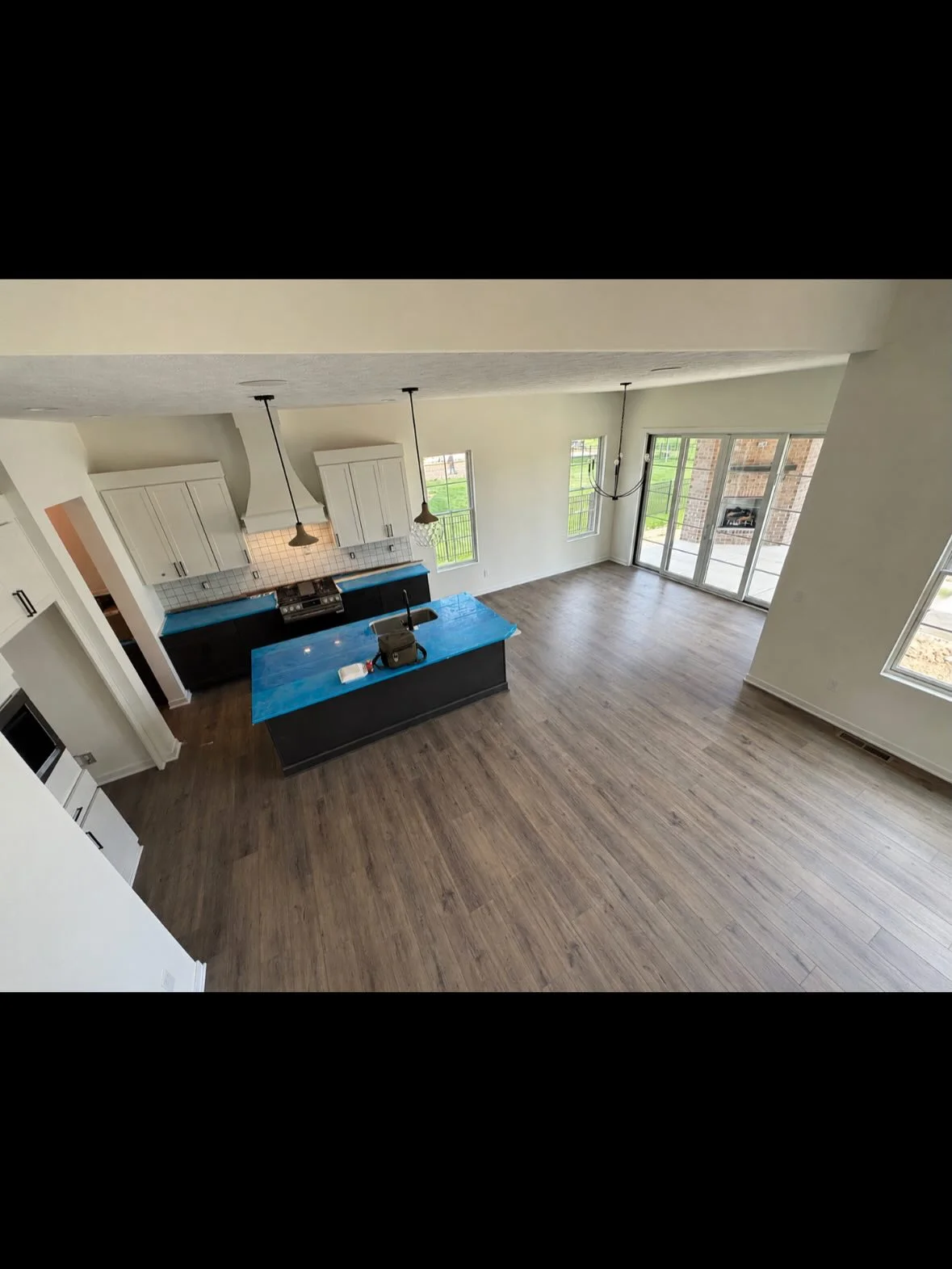
Indianapolis basements deal with a lot: clay soil that holds water after spring thaw, humid summer air that seeps through concrete, and the occasional freeze-thaw cycle that stresses foundations. Before you pick a floor for your basement, it helps to understand which materials actually hold up down there - and which ones don’t belong.
Why Basements Are a Different Challenge
Above-grade rooms deal with spills and the occasional humid week. Basements deal with moisture vapor moving up through the concrete slab, condensation on cool walls in July and August, and the risk of minor seepage after a heavy Midwest rain. Any flooring you choose needs to handle sustained dampness, not just an occasional splash.
| Flooring Type | Basement Moisture Performance | Our Take |
|---|---|---|
| Luxury Vinyl Plank | Fully waterproof core | Best all-around choice for finished basements |
| Engineered Hardwood | More stable than solid wood, still moisture-sensitive | Workable with a proper vapor barrier and dehumidification |
| Laminate | Water-resistant only, HDF core can swell | Fine in a dry, climate-controlled basement |
| Carpet | Absorbs moisture, risk of mold if damp | Best paired with a dehumidifier and moisture-resistant pad |
| Solid Hardwood | Not moisture-stable | Generally not recommended below grade |
Why Luxury Vinyl Plank Leads the Pack
Because its core is 100% synthetic, LVP simply doesn’t care about the moisture that basements naturally hold onto. It installs directly over concrete, handles the temperature swing between a heated basement and an unheated crawlspace wall, and still gives you that warm, wood-look finish for a home office, rec room, or guest suite. It’s the floor we recommend most often for finished Indianapolis basements.
If You Want Real Wood Downstairs
Solid hardwood’s single-piece construction makes it too reactive to basement humidity to recommend below grade. Engineered hardwood is a more realistic option - its layered, cross-grain core resists the swelling and movement that sinks solid wood in a basement - but it still needs a proper vapor barrier and a basement that isn’t chronically damp.
Laminate and Carpet: Workable With the Right Conditions
Laminate can look great in a basement that stays consistently dry and climate-controlled, but its wood-fiber core will swell if water ever gets into the seams - so it’s a bigger gamble than LVP in a space that floods even occasionally. Carpet can make a basement feel cozy for a media room or guest space, but it needs a moisture-resistant pad and a dehumidifier running through Indiana’s humid stretches to avoid mildew.
Before You Install: Check the Subfloor
Any basement project should start with an honest look at the slab - is it dry, is it level, has it ever taken on water? Our demolition and prep process includes that assessment, and our floor repair team can address cracks or unevenness before the new floor ever goes down.
Get a Basement Recommendation for Your Home
Every basement is different - some stay bone dry, others need real moisture management. We’ll walk your space, check the conditions, and recommend the flooring that will actually hold up. Request a free in-home estimate and let’s figure out the right floor for your basement.