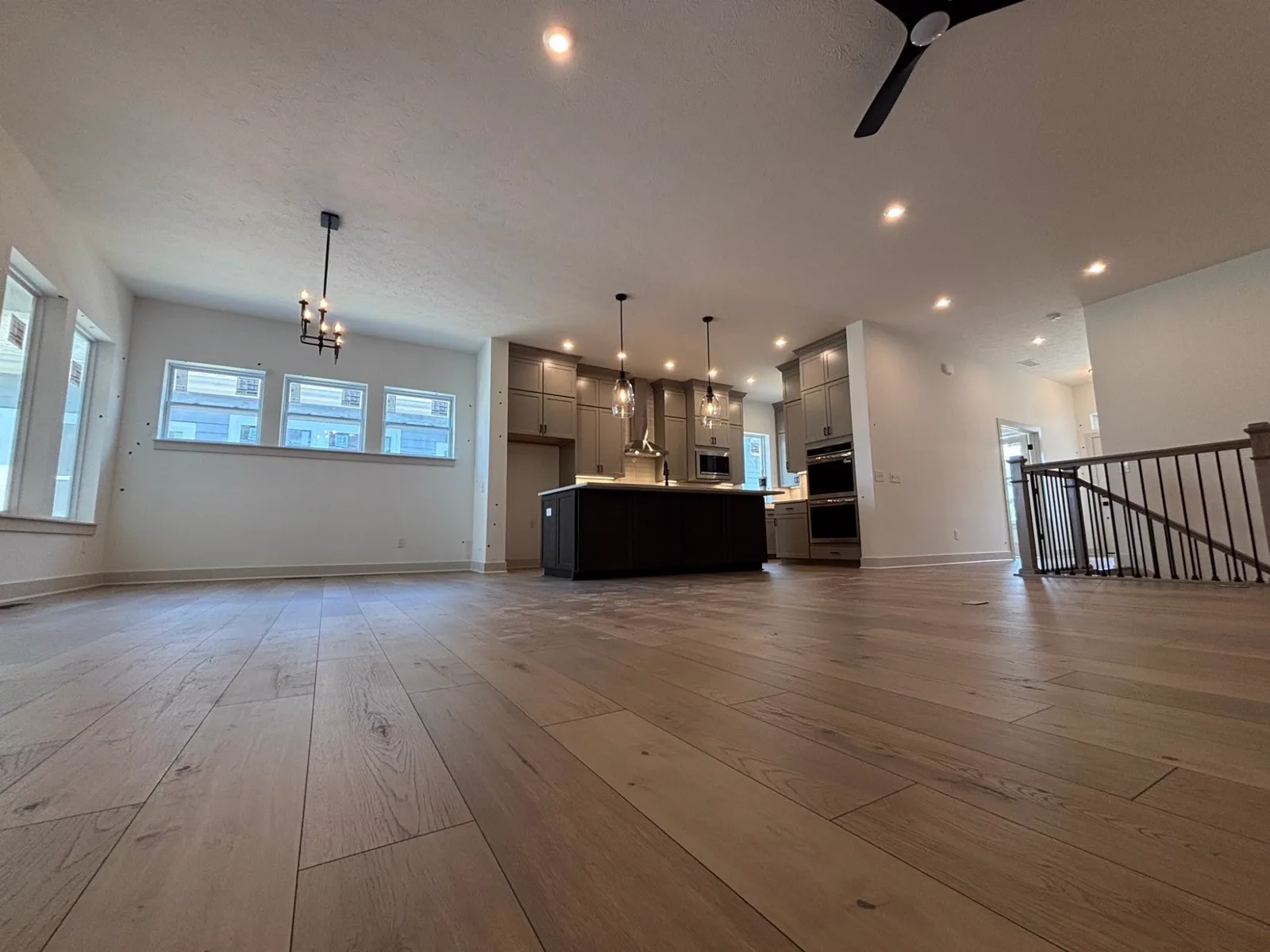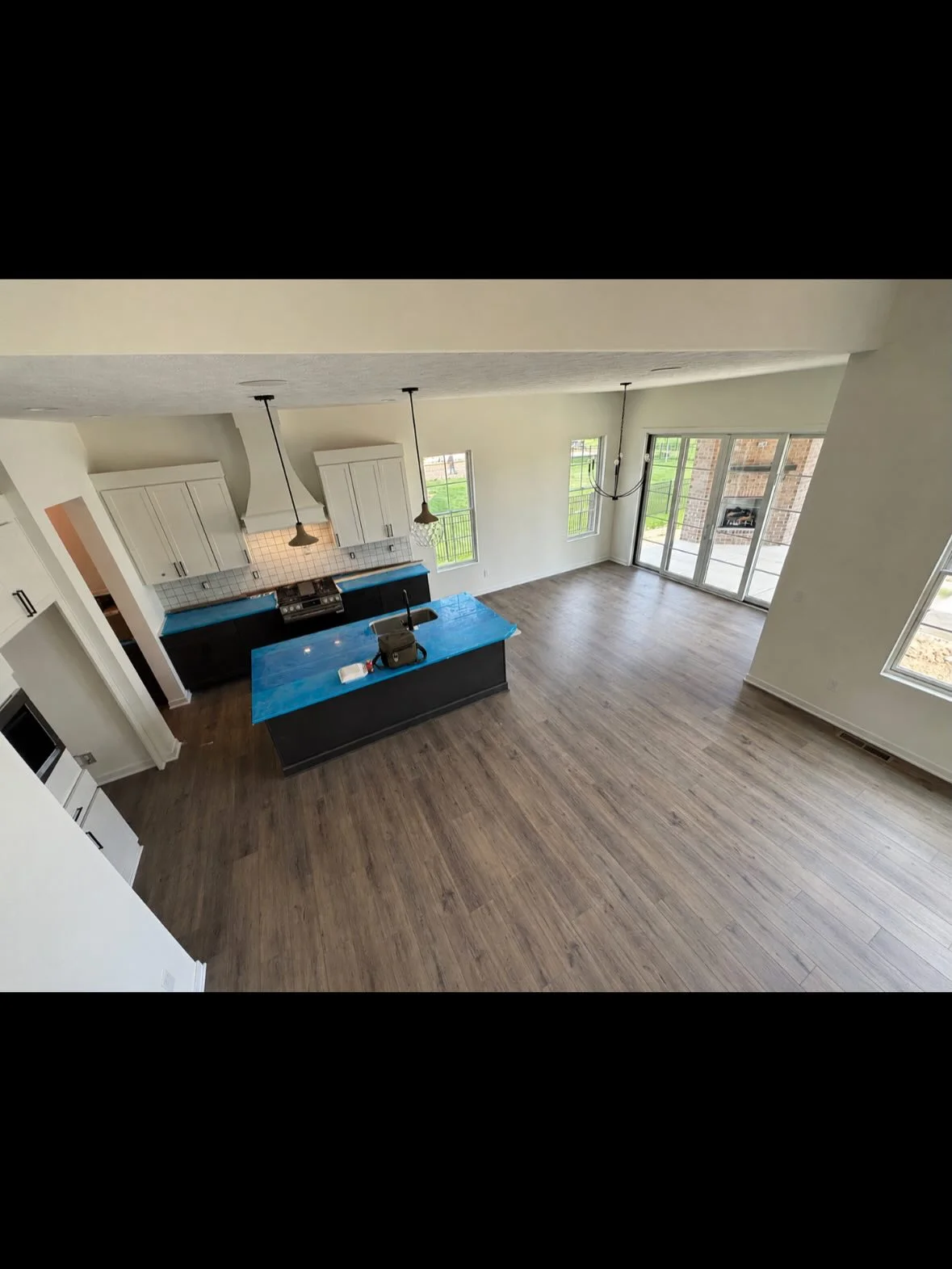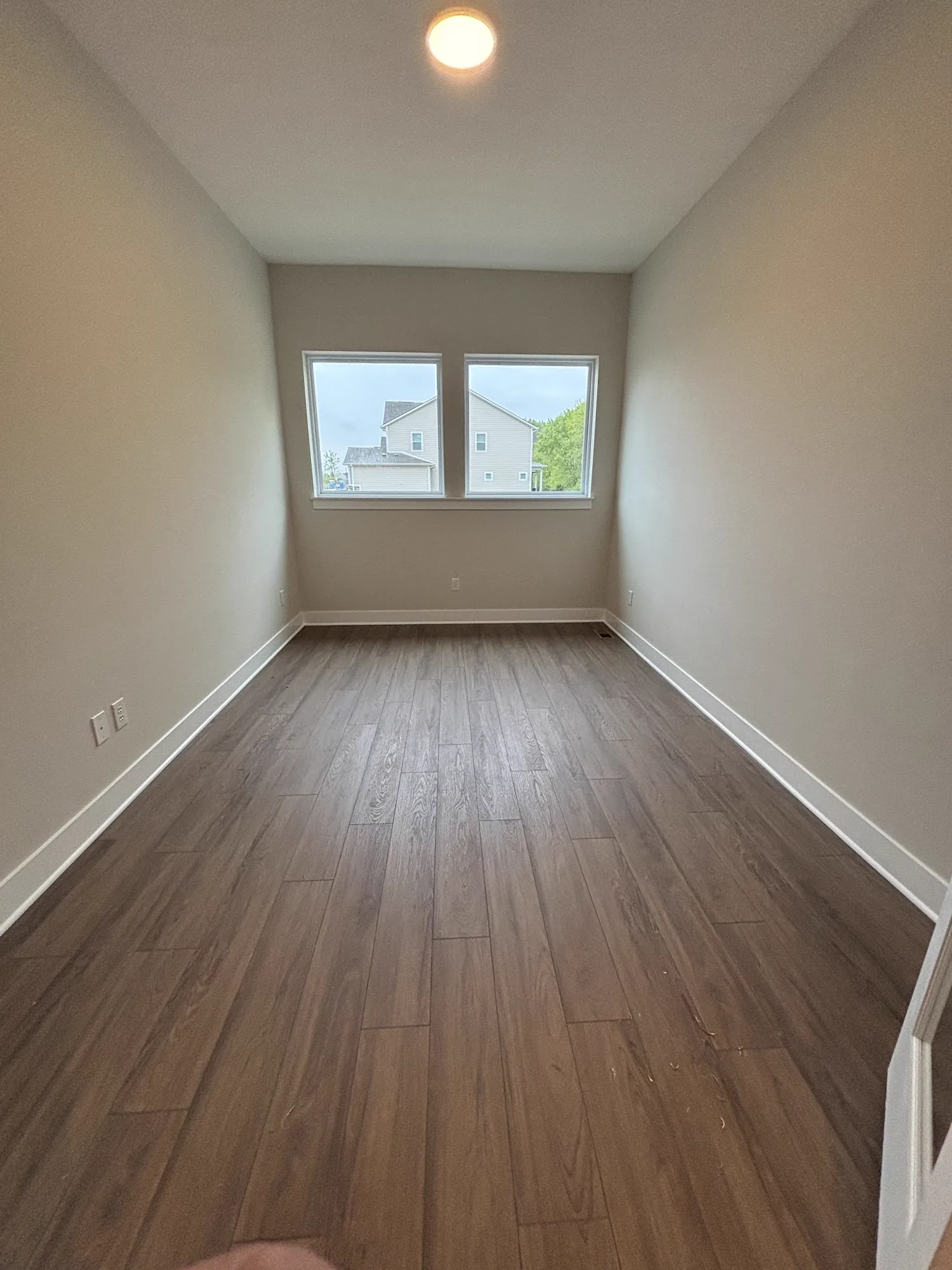
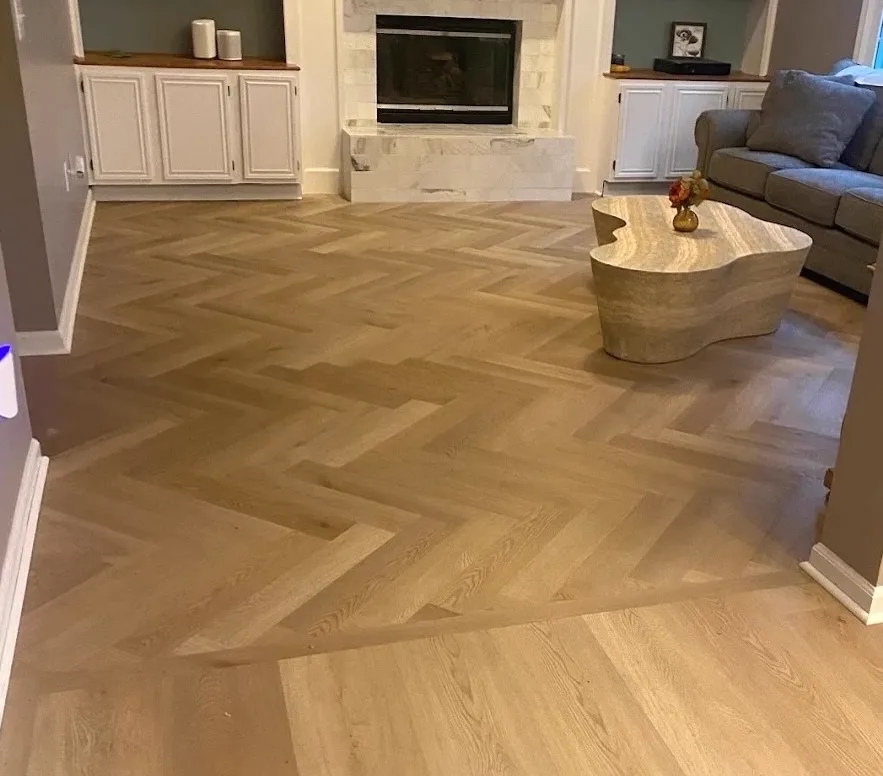
Central Indiana puts flooring through the wringer - humid, sticky summers followed by dry winters spent running the furnace nonstop. Both hardwood and luxury vinyl plank can look like rich, wide-plank wood, but they respond very differently to that yearly swing. Here’s how they actually compare for a home in the Indianapolis metro.
How Each One Handles Our Climate
Solid hardwood is a single piece of wood, so it naturally absorbs and releases moisture with the seasons - swelling slightly in July’s humidity and contracting when January’s furnace air dries the house out, sometimes opening small seasonal gaps between boards. Engineered hardwood’s plywood core resists that movement better, which is why it’s the wood option we usually recommend over concrete slabs or in basements. Luxury vinyl plank sidesteps the issue entirely - its core is plastic, so it doesn’t react to humidity or temperature swings at all.
Acclimation Matters More Here Than Most Places
Whichever hardwood you choose, it needs to acclimate in your home for several days before installation so the wood can adjust to your indoor humidity - skipping this step is the single biggest cause of gapping and cupping we see in Indianapolis homes. LVP doesn’t need acclimation time, which is one reason it installs faster and with less risk of a callback.
Durability and Everyday Wear
Hardwood is a beautiful, long-term investment in above-grade living areas, dining rooms, and bedrooms where moisture isn’t a daily concern. LVP resists scratches, dents, and standing water equally well, and it shrugs off the salt and slush that gets tracked in during an Indiana winter. For muddy-paw households or a kitchen that sees real daily traffic, LVP is usually the lower-worry choice.
Comfort and Feel
Solid wood has a firm, substantial feel underfoot that many homeowners love in formal living spaces. LVP is slightly softer and warmer, which matters on a January morning when the subfloor is cold. Neither is a bad choice - it comes down to where in the house you’re standing.
Cost and Long-Term Value
Hardwood carries a higher installed price, generally $7 - $15 per square foot depending on solid versus engineered, while LVP runs closer to $5 - $11. Hardwood tends to be the stronger resale signal in Indianapolis living rooms and dining rooms; LVP delivers more square footage of durable, water-safe flooring for the same budget - which is why so many finished basements and rental-adjacent properties go with vinyl plank.
Which Should You Choose by Room?
- Living and dining rooms, above-grade bedrooms: hardwood, for long-term value and resale appeal.
- Kitchens, basements, mudrooms: luxury vinyl plank, for its fully waterproof core.
- Homes over a slab or with a finished basement level: engineered hardwood if you want real wood without the movement.
- Stairs: either - see our hardwood stairs options for a traditional look.
Let’s Find Your Fit
Not sure which way to go? Bring us your rooms, your budget, and your household - kids, dogs, and all - and we’ll walk you through real samples in your own light. Request your free in-home estimate and let’s talk it through, neighbor to neighbor.